The pottery pay dispute in 1914
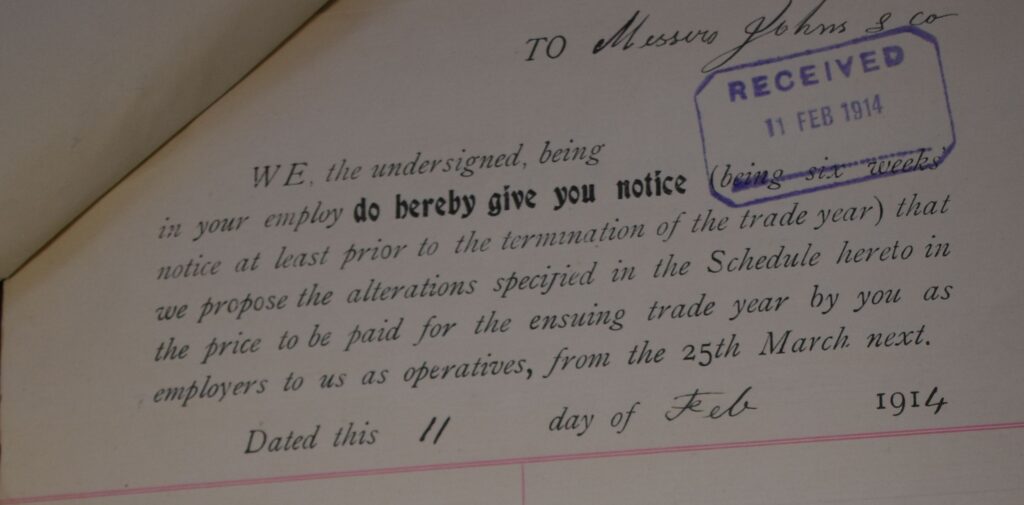
In 1914 the pottery industry followed the same procedure for pay discussions that had been developed in the 1890s and it had a very set annual pay round – every company in the industry followed exactly the same routine. Prices that were to be paid to the potters for the following 12 months were set on the 25th March and any change in prices, from either employers or potters, had to be submitted by 11th February – six weeks before the price setting day.
The employers in the sanitary ware market were represented by the British Pottery Manufacturers Federation (BPMF) who were initially set up to agree prices that they would charge their customers. It also looked to share information on wages and collect information about their foreign competitors.
The potters i.e. pressers and casters, were represented by the National Amalgamated Society of Male and Female Pottery Workers, or Potter’s Union for short. It had been formed five years or so earlier by amalgamation of a host of smaller unions such as the Amalgamated Society of Hollow-Ware Pressers.
There had been no change in prices in the sanitary ware market for 24 months and both sides wanted a change – in opposite directions of course.
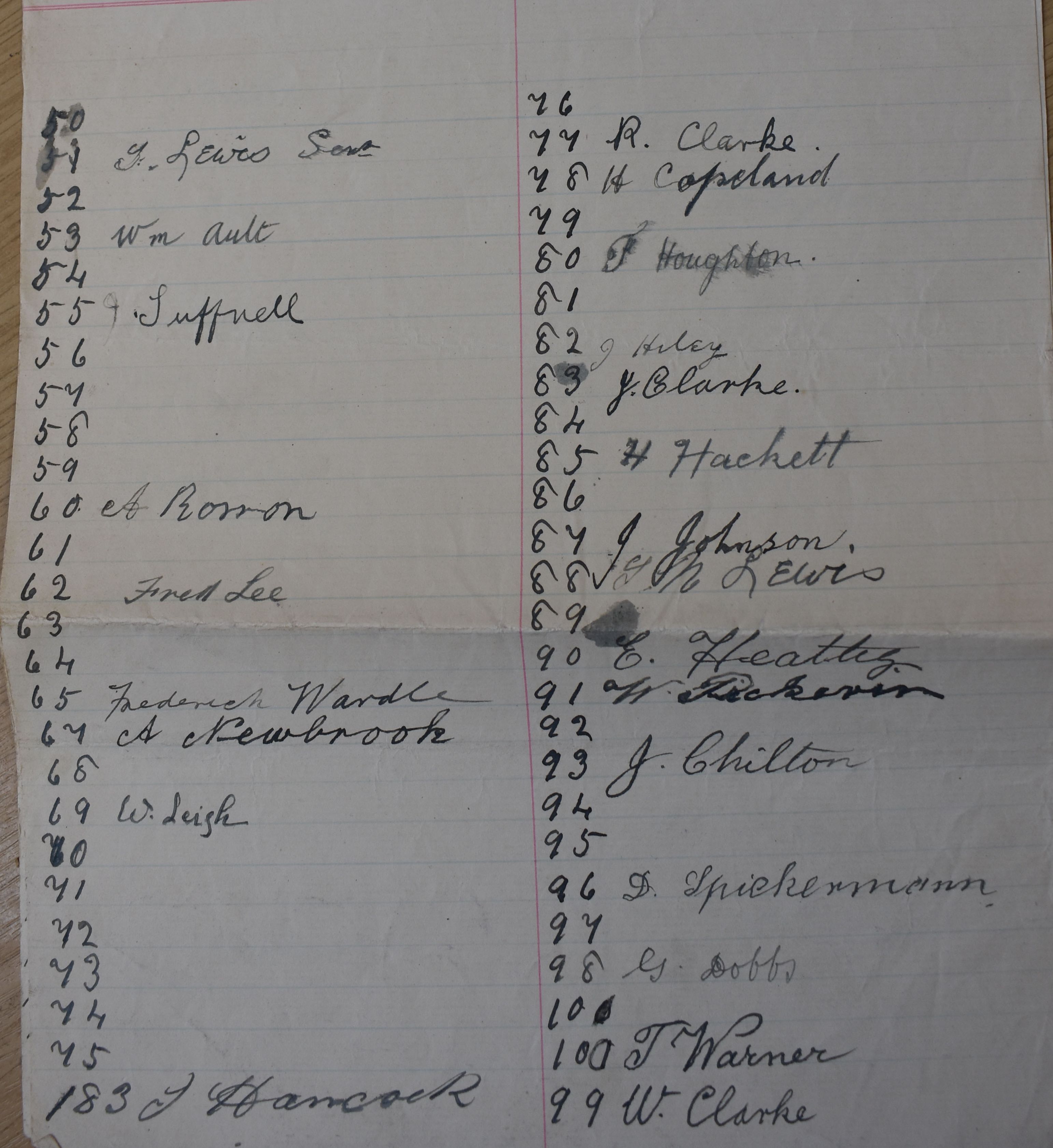
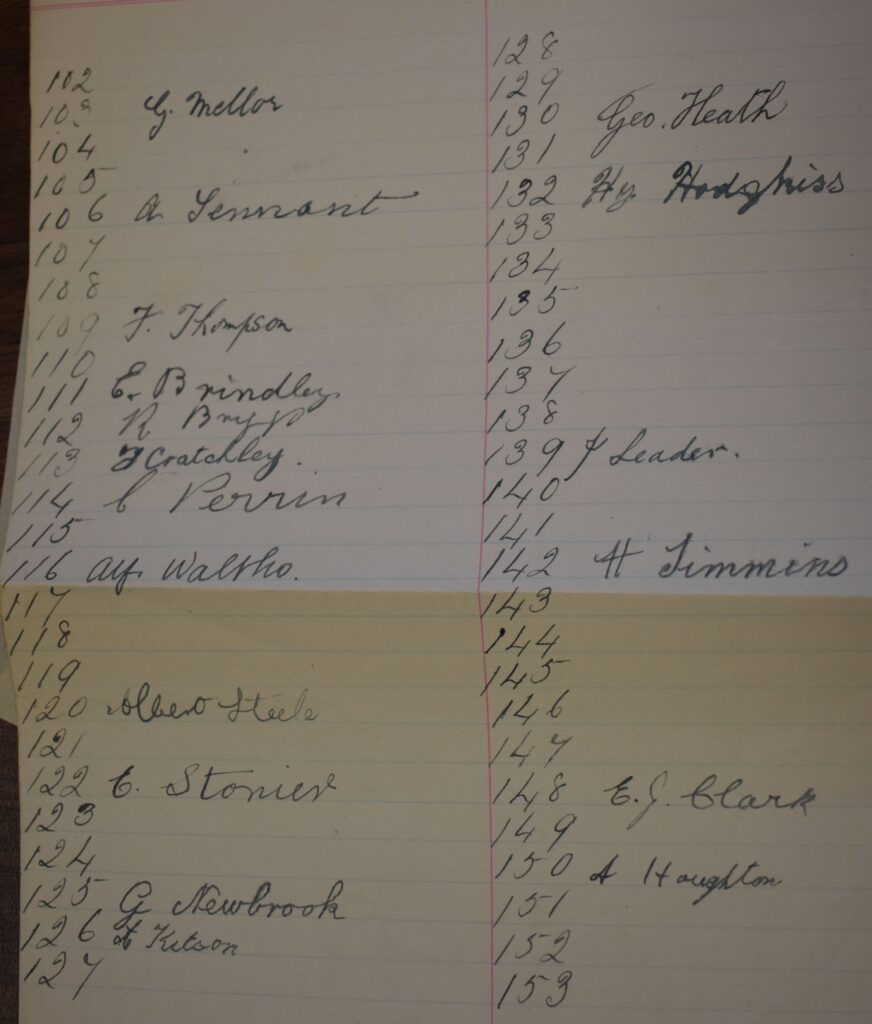
The National Amalgamated Society of Male and Female Pottery Workers, aka the potters union, had been pushing hard to recruit members with considerable success. Their latest recruit was John Thomas Peate who had worked at the pottery since the 1860s and he was a real feather in their cap. Not only had he been a member of Armitage Parish Council since its inception in 1894 but he had been its Chairman, the Parish Overseer and he was a leading light in the Congregational Chapel. Its numbers had now grown to over 50 and it also included plenty of the newcomers from the Potteries e.g. Robert Briggs and Elijah Brindley. Each union member had to sign the demand as can be seen below. The numbers associated with each individual are their membership number and the page covering numbers 1 – 49 is missing from the records although it may be that there were no longer members for those numbers so it might never have been included. The union put forward increases to the price of all products which was essentially 10% across the board.
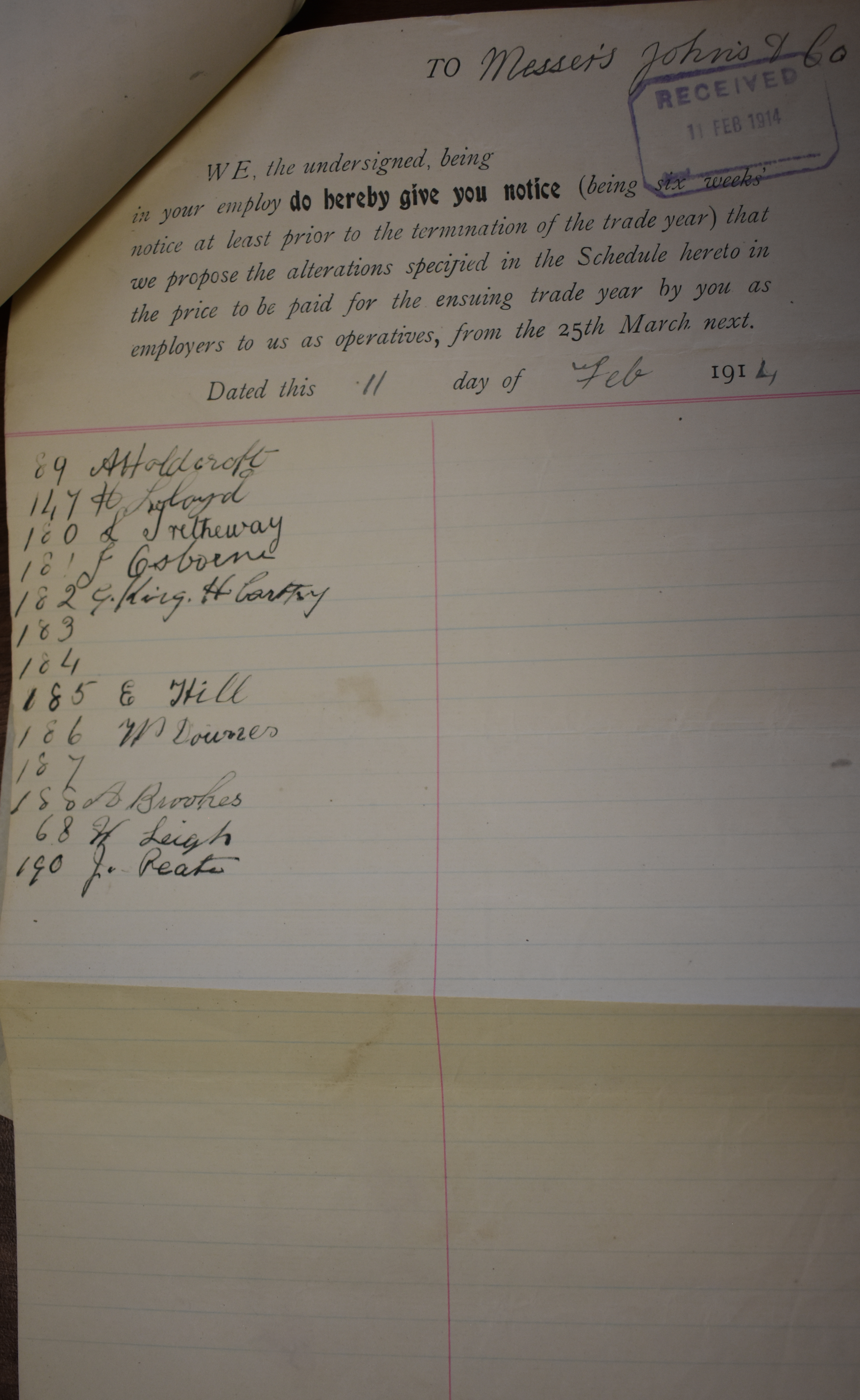
The company meanwhile proposed a reduction of 1s 3d in the price paid for each item. When Edmund Corn was interviewed by the Lichfield Mercury he stated that the reason that he (and other manufacturers) had proposed such drastic reductions was completely down to German competition. Sanitary ware manufacturers all seem to have been suffering from the same competition whilst general earthenware manufacturers were largely unaffected.
A joint committee of masters and men was set up – Edmund Corn as Chairman with three representatives from manufacturers and three from the potters. Meetings were held at the North Stafford Hotel in Stoke throughout March and into April and in mid-April a joint report was presented to the potters. The net result was no change in prices, but neither was the matter referred to arbitration by either side.
Six months later Great Britain was at war with the Germans. Number 96 in the photos above was D Spickermann (Dietrich) who was a German caster who had moved to the village to help train the casters. In 1908 he had married Annie Waltho with whom he had two children. In November 1914 his daughter died and was buried in Armitage graveyard and the register shows her address as 7 Ricardia Terrace. Dietrich is not found in any more records after signing the pay demand and he presumably had to return to Germany. Annie, many years later, is shown as a widow so it is likely that he died in the war.
The list contains six others who also died in the war
- Reginald George Clarke
- James Henry Clarke
- James Hiley
- Edwin Salt Hill
- Arthur Kitson
- Albert Victor Steele