
Robert Hedderwick Penman: The Man Who Took Armitage to Glasgow
The history of Armitage pottery is usually told through the names of Thomas Bond, Edward Johns, Edmund Corn and the Stott brothers. Yet between Bond’s struggling pottery and Johns’ successful enterprise stood one of the most intriguing figures in the village’s industrial history.
Robert Hedderwick Penman was not a Staffordshire potter. He was born in Scotland and worked as a shipping agent. Yet in the early 1850s he arrived in Armitage and embarked upon an ambitious pottery venture that would link the village with London, Glasgow, New Zealand and eventually New York.
More than 170 years later, one simple question remains unanswered: Why did Robert Penman choose pottery?
An Outsider Arrives in Armitage
When Penman entered the pottery industry he was not following the traditional route. He was not a master potter who had worked his way up through the trade, nor was he part of one of the established Staffordshire pottery families.
Instead he appears to have been a businessman attracted by opportunity.
The timing was significant. The Trent Valley Railway reached Armitage in 1847, transforming communications between London, the Potteries and the industrial centres of Britain. A businessman travelling between London and North Staffordshire would pass directly through the village.
Penman’s family background may also have played a role. His wider family had connections with the glass and marble trades, industries closely associated with Victorian architecture, design and decoration. Through Thomas Carey Swan and the Swan family there were also links with printing and publishing.
The Great Exhibition of 1851 may also have been influential. The exhibition showcased British industry, ceramics, decorative arts and technological innovation on an unprecedented scale. Whether Penman visited the exhibition is unknown, but the timing of his move into pottery manufacture immediately afterwards is certainly suggestive.
None of these clues provides a definitive answer, but together they suggest that Penman may have been attracted to pottery for reasons that went beyond simple profit. He appears to have been interested in design, trade and new opportunities as much as manufacture itself.
Building the New Pottery
In 1852 Penman and Thomas Carey Swan who later became his brother-in-law established the New Pottery on the site of the former Armitage Brewery.
The contrast with the existing pottery could hardly have been greater.
Thomas Bond’s pottery had developed gradually from a collection of buildings that had originally served other purposes. Houses, agricultural buildings, brewery premises and workshops had been adapted over time to meet the needs of pottery production. It was a village industry that had evolved piecemeal.
Penman’s New Pottery represented a completely different approach.
It was a purpose-built factory designed specifically for pottery manufacture. The works included biscuit and glost ovens, enamel kilns, printers’ workshops, warehouses and a canal wharf equipped for handling goods. Rather than adapting existing buildings, Penman created an industrial complex planned from the outset as a modern pottery.
The scale of the investment reveals the confidence of the venture. This was not merely an extension of the existing industry but an attempt to create a new and more ambitious pottery enterprise in Armitage.
Local people would later remember it simply as “Penman’s Works”, a sign that his name became closely associated with the factory long after he had left the village. The survival of the name may have reflected several factors. The New Pottery was unlike anything previously seen in Armitage: a purpose-built factory incorporating specialised facilities for every stage of production, including printers’ workshops and multiple enamel kilns. Contemporary observers also remembered Penman as an unusually visible employer. In 1858 the firm treated its workforce and their families to a large social gathering attended by more than seventy people, an event that local newspapers described as a demonstration of the “esteem and good feeling” that existed between employer and employees. Finally, the works themselves eventually disappeared. Unlike the Old Pottery, which continued to evolve under successive owners, Penman’s factory was demolished and became a vanished landmark. Together these factors may explain why local memory continued to associate the site with Penman long after his departure.
London Connections and Wider Ambitions
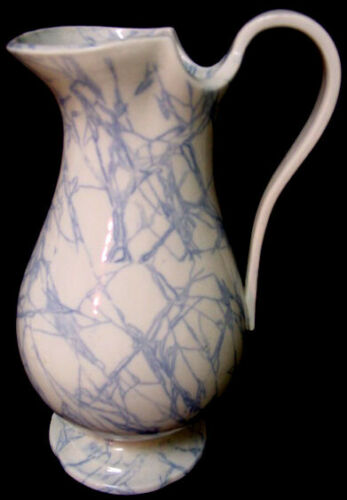
The New Pottery was never intended to serve only local markets.
Penman maintained connections with London, where the company operated a showroom in Holborn. The geography of his own family reflects this wider outlook. His first child was born in Armitage, his second child, Edith, was born in Holborn, and his third child was again born in Armitage.
These movements illustrate a businessman whose activities extended far beyond a Staffordshire village. At a time when many pottery manufacturers concentrated on regional markets, Penman appears to have been looking much further afield.
Looking Beyond Staffordshire
The most striking aspect of Penman’s career is its international character.
Evidence survives of overseas commercial contacts and export ambitions. Products from the pottery were reaching distant markets only a few years after the works opened.
The most remarkable discovery came more than a century and a half later. Divers exploring the wreck of the Josephine Willis, which sank in 1856 while carrying emigrants and cargo to New Zealand, recovered a water closet stamped “P.B. & Co., Armitage”. The initials represented Penman, Brown & Co., one of the partnerships operating the pottery during Penman’s tenure.
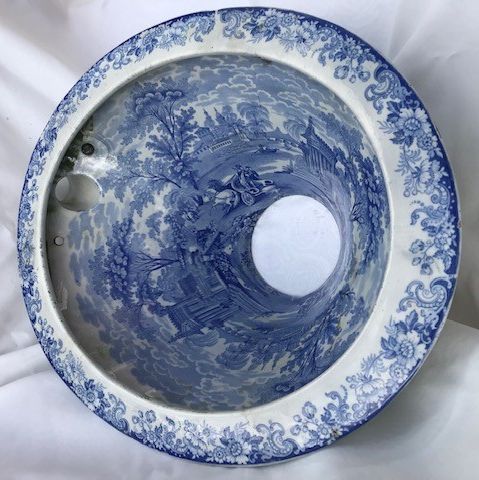
The find demonstrated that sanitary ware produced in Armitage was already being shipped to the far side of the world.
There are also tantalising references to the Paris Exposition Universelle of 1855. Later company histories claimed that Armitage pottery exhibited there and attributed the exhibit to “Salt & Swan”. Yet Swan was Penman’s partner and no evidence has been found that he ever partnered Salt who was earlier involved in the Old Pottery. Searches of the exhibition catalogue have so far failed to identify a clear Armitage entry.
Whether Penman’s enterprise exhibited in Paris remains unproven. However, if any Armitage pottery concern was actively pursuing international recognition during the mid-1850s, his business appears the most plausible candidate.
Success Without Stability
For all his ambition, Penman struggled to create a stable business.
A succession of partnerships came and went. Swan was followed by other partners, including George William Brown, Alexander Allan Laird and John William Oslear.
The pattern repeated itself throughout his career. New ventures were launched with confidence and energy, but long-term financial stability proved elusive.
Yet what is striking is not the failures themselves but Penman’s determination to continue. Many businessmen would have abandoned the trade after such setbacks. Penman repeatedly started again.
Taking Armitage to Glasgow
In 1860 Penman left Staffordshire and returned to Scotland.
His departure might have marked the end of his connection with Armitage, but instead it produced one of the most curious episodes in his life.
After returning to Glasgow he established another pottery.
He called it Armitage Pottery.
This decision remains one of the most revealing aspects of Penman’s character. His Staffordshire venture had failed. The pottery he had built no longer belonged to him and was eventually destroyed. Yet he chose to carry the name of Armitage back to Scotland and use it as the identity of his new enterprise.
Why? We do not know.
Perhaps he regarded Armitage as the most important business venture of his career. Perhaps he believed the name already possessed commercial value. Perhaps the village represented a formative chapter in his life. Whatever the reason, it suggests that Armitage meant far more to him than a failed investment.
The Glasgow pottery later became known as the Osley Pottery, but Penman’s original choice of name remains a fascinating clue to how he viewed his years in Staffordshire.
People and Connections
Penman’s influence did not end with buildings or products. One of the most striking features of his career was his apparent ability to build and maintain personal relationships. Throughout his life a recurring group of associates, partners and employees appear around him in different places and at different stages of his career. Although his businesses often struggled financially, the loyalty of some of those around him appears to have endured.
The movement of workers between Armitage and Glasgow suggests that personal networks followed him north. Potters such as James Wagg appear to have worked in both locations, while James Simpson became a particularly important figure.
Simpson was associated with Penman’s Glasgow pottery and witnessed the dissolution of one of its partnerships. The relationship appears to have been close, as Penman named one of his sons John Simpson Penman. Simpson later moved to Armitage, where he became Potter’s Manager under Edward Johns.
These connections hint at a network of skilled workers and managers moving between Scotland and Staffordshire, carrying experience, knowledge and contacts with them.
The Final Journey
Eventually Penman left Britain altogether. He emigrated to New York, returning to the shipping world from which he had originally emerged. His life had taken him from Scotland to London, Armitage, Glasgow and America.
Few figures associated with the pottery industry of a small Staffordshire village travelled so widely.
An Enduring Mystery
Robert Hedderwick Penman never achieved the lasting success later enjoyed by Edward Johns. His businesses were repeatedly reorganised, partnerships dissolved and ventures abandoned. Yet measuring him solely by commercial success risks missing what made him unusual.
He remains one of the most fascinating individuals in the history of Armitage pottery.
He transformed pottery manufacture in Armitage from an industry housed in adapted village buildings into one centred on a purpose-built Victorian factory. He sought markets far beyond Staffordshire. He cultivated relationships that survived the collapse of individual partnerships. His products travelled overseas. He carried the name “Armitage Pottery” to Scotland. His career eventually took him across the Atlantic to New York.
Most importantly, he left behind questions that are still not fully answered.
Why did a Scottish shipping agent choose pottery?
Why did he choose Armitage?
And why, after leaving the village behind, did he continue to carry its name with him?
Those mysteries ensure that Robert Hedderwick Penman remains one of the most intriguing figures in the story of Armitage pottery.