
Duck stone
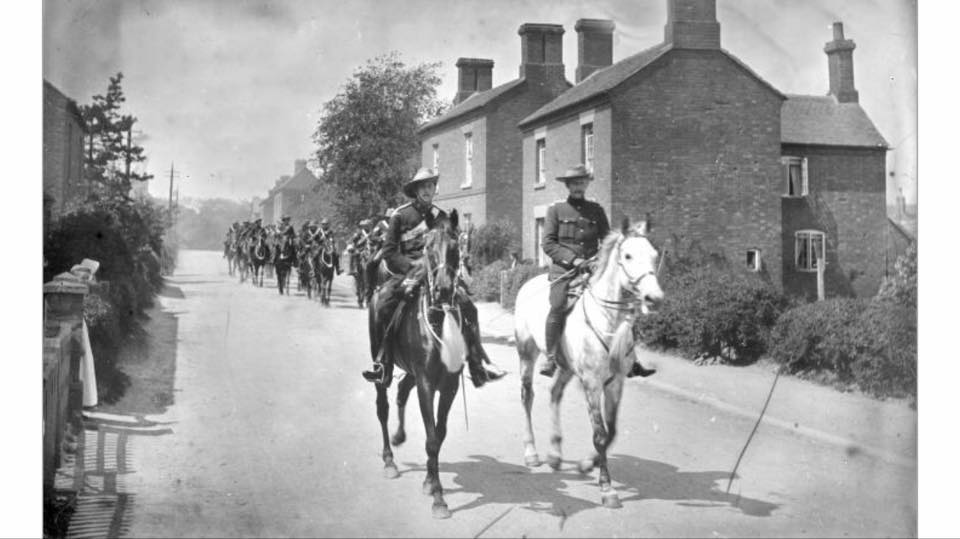
In 1899 the road through the villages of Armitage or Handsacre was no different to any other English village in construction – it was macadamised. This meant that the lower 8” of road was made up of stones no bigger than 3” and the upper 2” surface layer was made up of stones no bigger than ¾”. There was no binder added and tarmac (tarmacadam) hadn’t been invented yet.
The odd steam engine came through the villages and even one or two steam cars had been seen in the village over the last few years but the traffic, such as it was, consisted of pedestrians, horses, carts and cycles of various types.
It wasn’t unusual for kids or even adults to play in the road and one particular day five lads in their late teens and early twenties – Tom and Joe Osborne, John Sefton, George Mellor and Harry Turner – were playing a game in the road with two large stones.
They were pretty boisterous and throwing two large stones a fair distance down the road. The local bobby, P.C. Davies, didn’t like that and said that playing duck-stone ‘on the highway’ was dangerous. The lads denied playing duck-stone and said that they were only playing “kilto”.
Davies had received many complaints, largely about these particular lads, and had seen stones and brick-ends left in the road. Recently a cyclist had fallen off his bicycle after hitting a brick and been knocked unconscious. Given that the recently formed Armitage Bicycle Club (ABC as they called themselves) had the local solicitor, H.W. Gardner Esq. as President and Josiah Spode Esq. as Vice-President the incident may well have been on P.C. Davies’ mind. He decided that they were ‘breaching the peace’ and arrested them for disorderly conduct.
The Chairman of Rugeley Bench agreed with him stating that acting in such a manner was a very dangerous practice and they were each fined 2s 6d with 6d costs.
According to smart-kids “duck-stone” was played as follows:-
The game may be played by any number of players. A large stone is selected, and placed on a particular spot, and the players first ” Pink for Duck,” that is, they each throw their stones up to the mark, and the one who is farthest from it becomes ” Duck.”
The Duck places his stone on the other, while the rest of the players return to the bounds, and in succession pitch their stones at his with the endeavour to knock it off.
If this is accomplished, Duck must immediately replace it, and the throwers must pick up their stones and run to the bounds.
As soon as Duck has replaced his stone, he runs after any of the other players, and if he can succeed in catching or merely touching any one of them, the player so touched becomes Duck.
As for “kilto” I can’t find anything for a game of that name but it was obviously a well-known kids game. Any ideas?