Gateway to the Past: The Story Behind Handsacre’s Historic Gateposts

By Roy Fallows
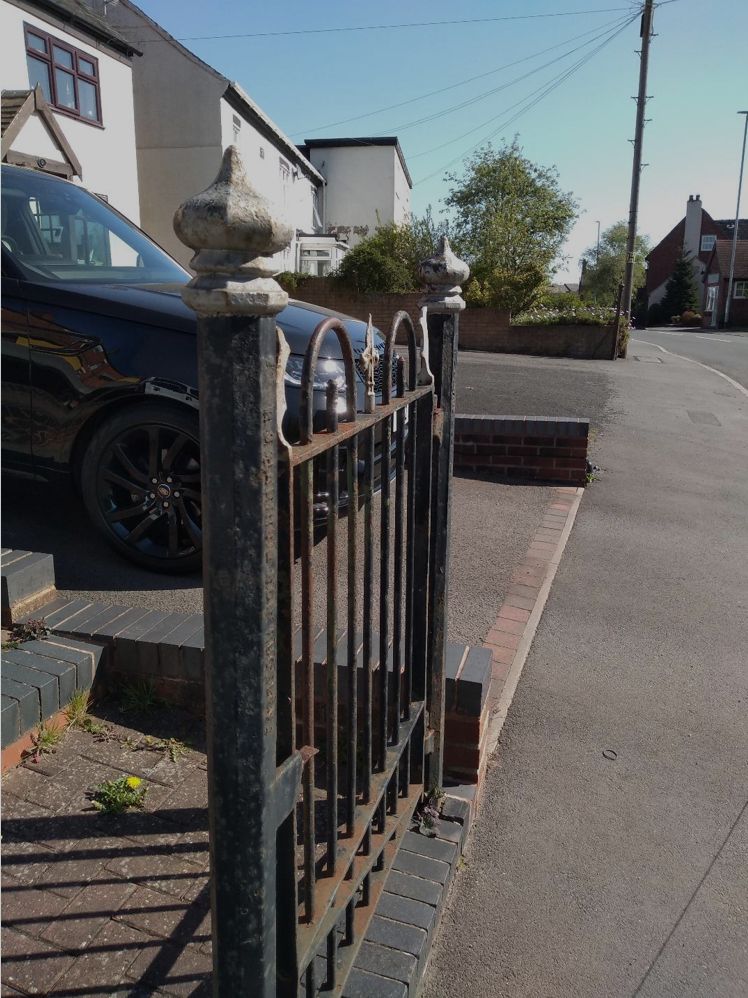
Historic cast-iron gateposts with decorative finials and iron railings beside a pavement in Handsacre, Staffordshire, with houses and a parked car in the background.
Figure 1

Ok, not the most inspiring photograph of the year but, it has a bit of local history attached which I thought was worth investigating.

The posts are in cast iron and the gate, possibly more recent wrought iron, are located outside a house at the top of Old Road in Handsacre, opposite the Old Peculiar pub.  Most of that row of houses still have their gate posts which are over 100 years old. 
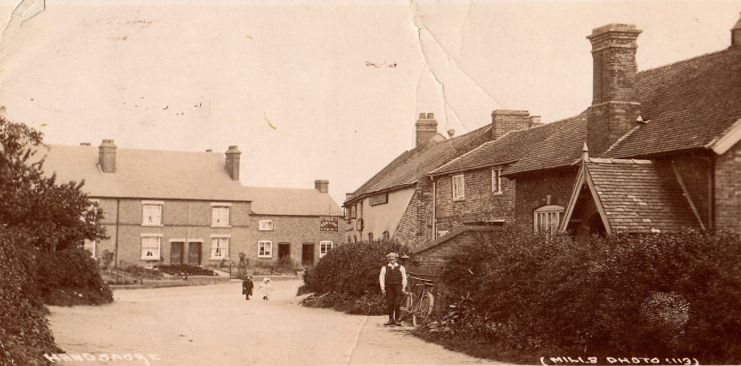
Early 20th-century sepia postcard showing Old Road in Handsacre, with a row of cottages, historic iron gateposts, hedges and several people standing beside the road.
Figure 2

A closer look into the background of this old photograph shows the gates when they were just a few years old. Cast into the gate posts is the name R J HARRIS & SON RUGELEY. This name sounded familiar and worthy of a spot of research.

A quick dip into Around Rugeley compiled by Thea Randall and Joan Anslow got the ball rolling with some great old photographs.

Robert J Harris was born in 1834 in Hamstall Ridware (or Pipe Ridware according to some records).  It appears he was part of a catholic family and was baptised at St Frances de Sales catholic chapel which is in Woodlane (A515) between Yoxall and the Foresters Arms.  His parents were George (born in Abbots Bromley) and Elizabeth Sherwood from Hamstall Ridware.  By 1855 he had established himself as an ironmonger in Market Place in Rugeley.  He lived above the shop with his wife Emma, also born in Hamstall Ridware, and son Robert J.  By the time of the 1901 Census he had two daughters, Mary aged 35 and a clerk, and Veronica 28 a cotton spinner.  There was also a 22yrs old son James, described as an imbecile.
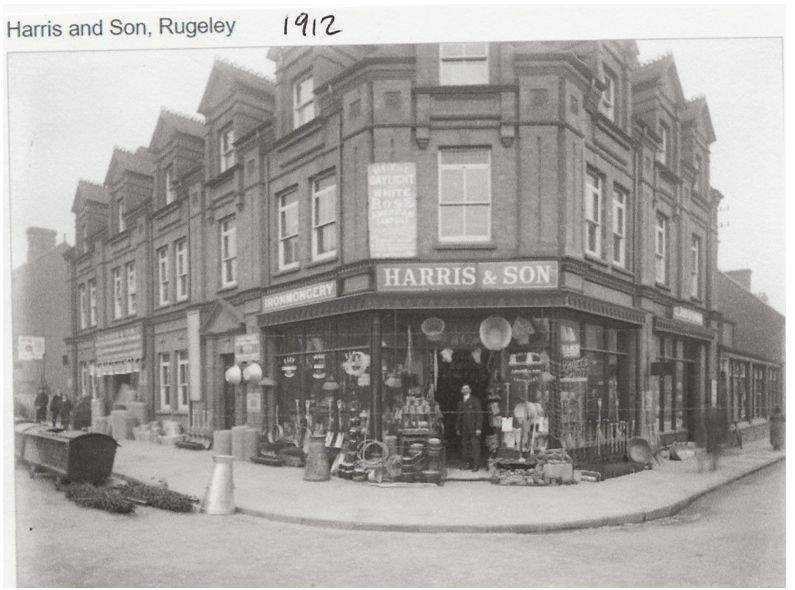
Black-and-white photograph dated 1912 showing Harris & Son's ironmongery shop in Rugeley, occupying the ground floor of a large three-storey corner building, with goods displayed outside and people standing at the entrance.
Figure 3 From Around Rugeley In Old Photographs

The business was a typical old fashioned ironmongers that supplied anything and everything for the rural community in and around Rugeley.  They were very successful and began making their own products in the Phoenix Ironworks in nearby Market Street. 
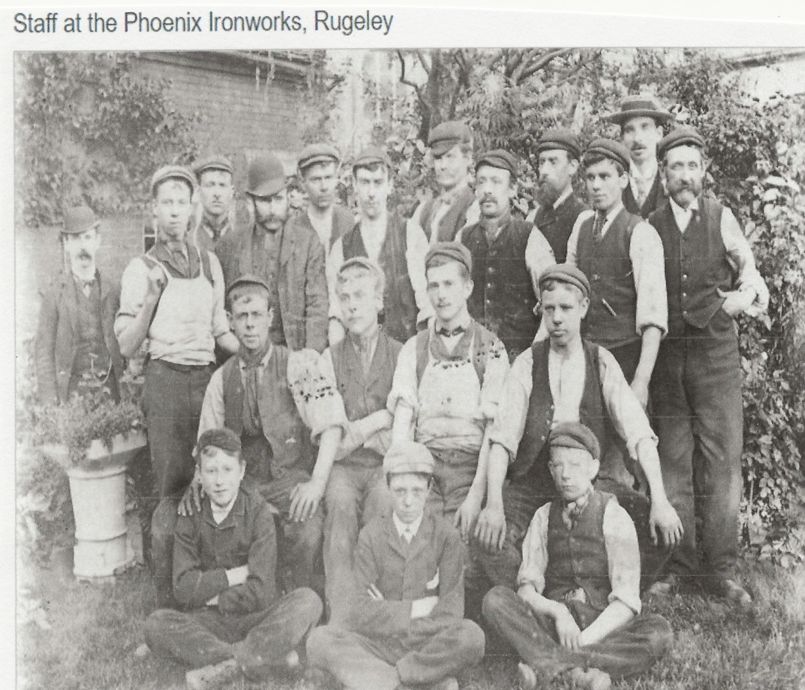
Historic black-and-white group photograph of men and boys employed at the Phoenix Ironworks in Rugeley, Staffordshire, arranged in standing, seated and crouching rows outdoors, wearing work clothes, waistcoats, caps and aprons.
Figure 4 From Around Rugeley In Old Photographs

This photograph shows the men and boys who may have made our gateposts.  The only remains left of the Phoenix works is a wall immediately across the road from the former Rugeley Magistrates Court in Market Street.
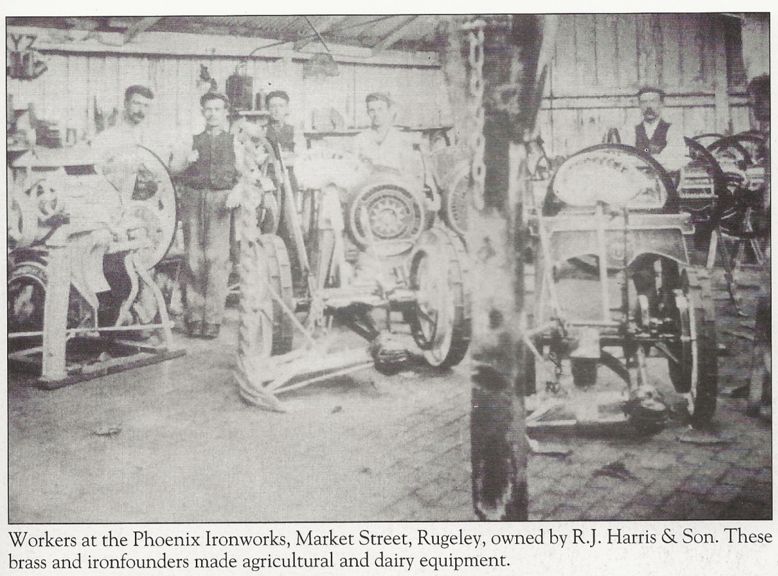
Historic black-and-white photograph of workers inside the Phoenix Ironworks in Market Street, Rugeley, operated by R. J. Harris & Son, showing large machinery used to manufacture agricultural and dairy equipment.
Figure 5 From Around Rugeley In Old Photographs

They manufactured brass and ironwork for the dairy and agricultural market.  One of their lines was garden rollers which were sold through Selfridges and Harrods in London.

One of Harris’ rivals in the town was Woodruffe’s Foundry which has now completely gone.  It was situated at the corner of Queen Street and Forge Road.  The area, opposite the council car park and Morrisons car park, was redeveloped some years ago and new houses and bungalows built. A few years later Harris’s took over Woodruffe’s Albion Foundry in the town who were also mechanical engineers.
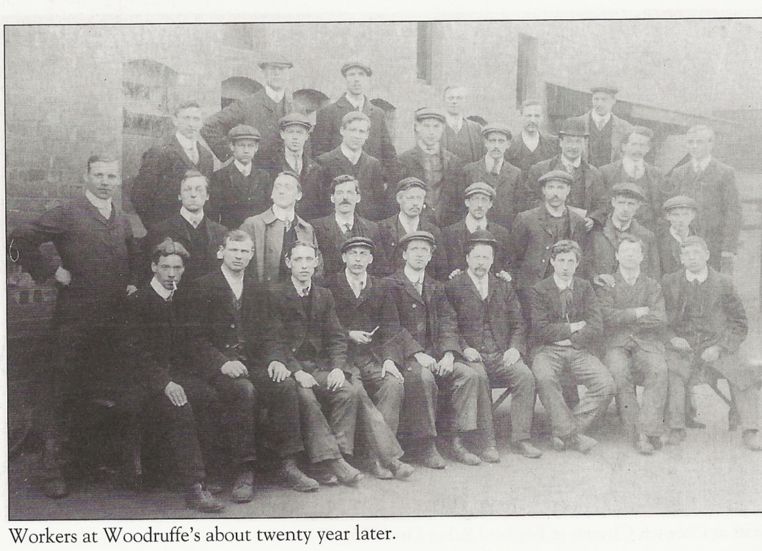
Historic black-and-white group photograph of approximately thirty male workers from Woodruffe’s Foundry in Rugeley, arranged in several rows outside a brick building, wearing jackets, waistcoats and caps.
Figure 6 From Around Rugeley In Old Photographs
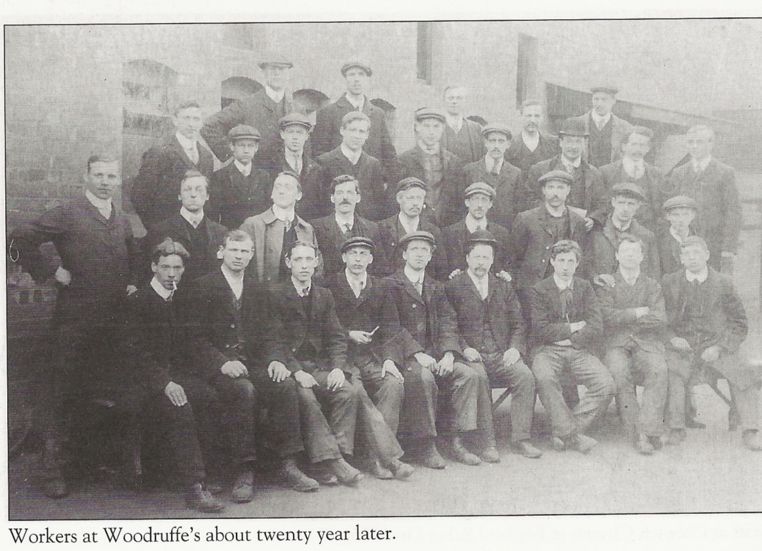
Historic black-and-white group photograph of approximately thirty male workers at Woodruffe’s Foundry in Rugeley, taken about twenty years after the previous photograph. The men are arranged in rows outside a brick building, wearing jackets, waistcoats and caps.
Figure 7 From Around Rugeley In Old Photographs

RJ Harris became a fixture for many years in Rugeley and provided employment for a lot of local men.  Like today, skilled labour seemed to be hard to find as evidenced by an advertisement in the Birmingham Daily post for 3rd June 1889 where Harris asked for 2 men, experienced in mowers and horse rakes. In 1900, the Staffordshire Advertiser carried an advertisement for the company indicating their skills at drilling wells and installing pumps.
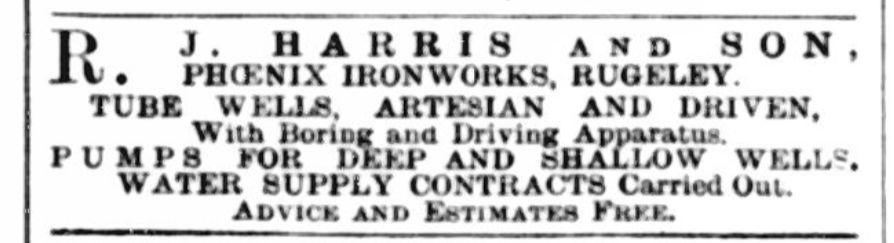
Newspaper advertisement from the Staffordshire Advertiser, 10 February 1900, for R. J. Harris & Son of the Phoenix Ironworks, Rugeley, advertising artesian and driven tube wells, pumps for deep and shallow wells, boring equipment and water supply contracts.
Figure 8 Staffordshire Advertiser 10th February 1900

Throughout the first half of the 20th Century Harris’s continued with their usual trade and expanded into engines and other machinery. They advertised their services and products throughout the local area and beyond.  They even advertised in the West Briton and Cornwall Advertiser on 16th December 1920.

Newspaper advertisement from the West Briton and Cornwall Advertiser, 16 December 1920, for Harris & Son Ltd of the Phoenix Ironworks, Rugeley, offering fittings and spare parts for Woodruffe & Co’s agricultural machinery.
Figure 9 West Briton and Cornwall Advertiser 16th December 1920

In 1940, Bernard Aloysius Harris, the managing director of RJ Harris at that time died.  As an indication of the prosperity of the company he left over £5000 in his will.  Nearly £300,000 in today’s money.
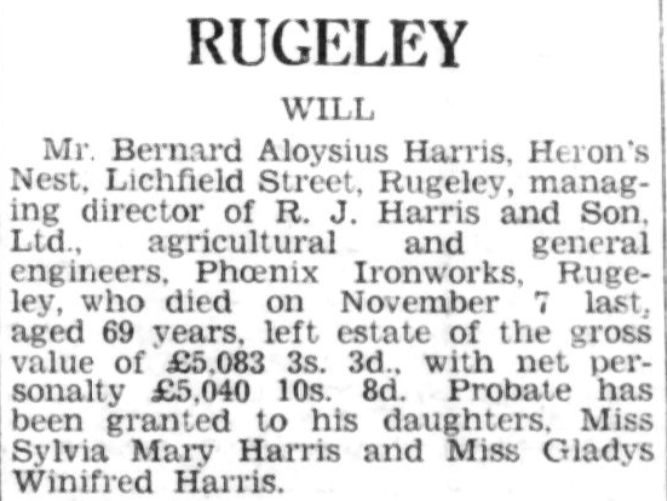
Newspaper report from the Staffordshire Advertiser, 17 February 1940, recording the estate of Bernard Aloysius Harris, managing director of R. J. Harris & Son Ltd, Phoenix Ironworks, Rugeley. His estate was valued at £5,083, with probate granted to his daughters Sylvia Mary and Gladys Winifred Harris.
Figure 10 Staffordshire Advertiser 17th February 1940

Although Harris’s ceased trading some time ago there is one of their products, a clothes mangle, in the County Museum stores.  When the museum reopens in its new location it may be on display for all to see and remind us of the type of industry which used to take place in Rugeley.
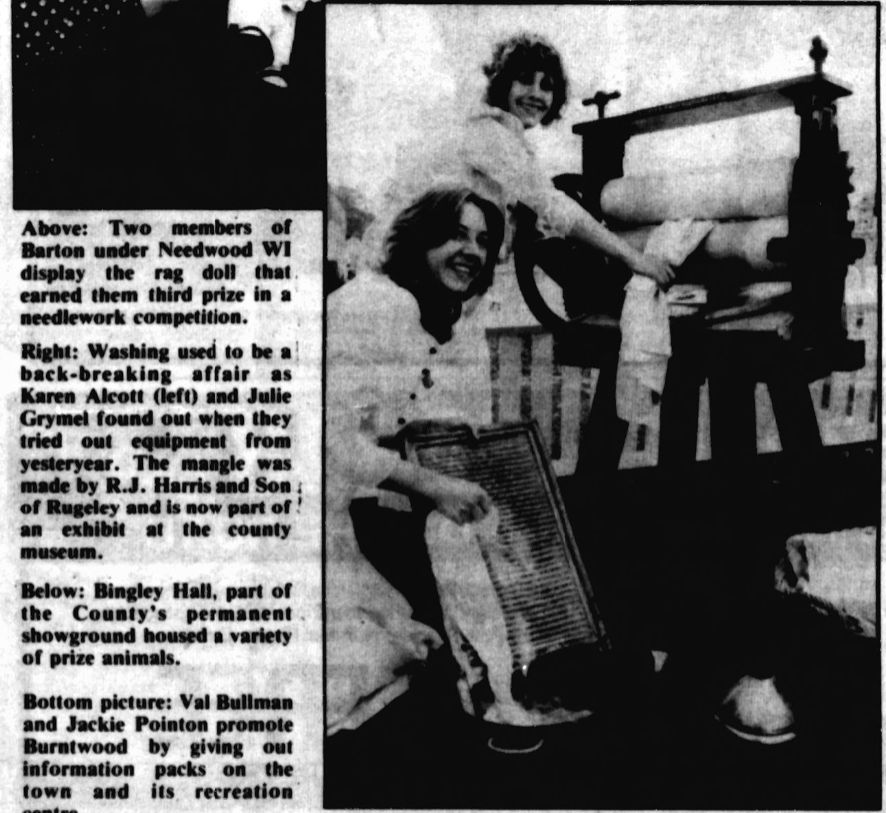
Newspaper photograph from the Lichfield Mercury, 1 June 1984, showing Karen Alcott and Julie Grymell demonstrating an old-fashioned clothes mangle made by R. J. Harris & Son of Rugeley, formerly of the Phoenix Ironworks. The mangle was part of an exhibition at the County Museum.
Figure 11 Lichfield Mercury 1st June 1984

Marion Kettle from the Landor Local History Society has kindly assisted me by providing a copy of an interview from some years ago with Miss Cecile Harris.  I have attached it here as it makes interesting reading in its own right, as well as adding to my story of the company.
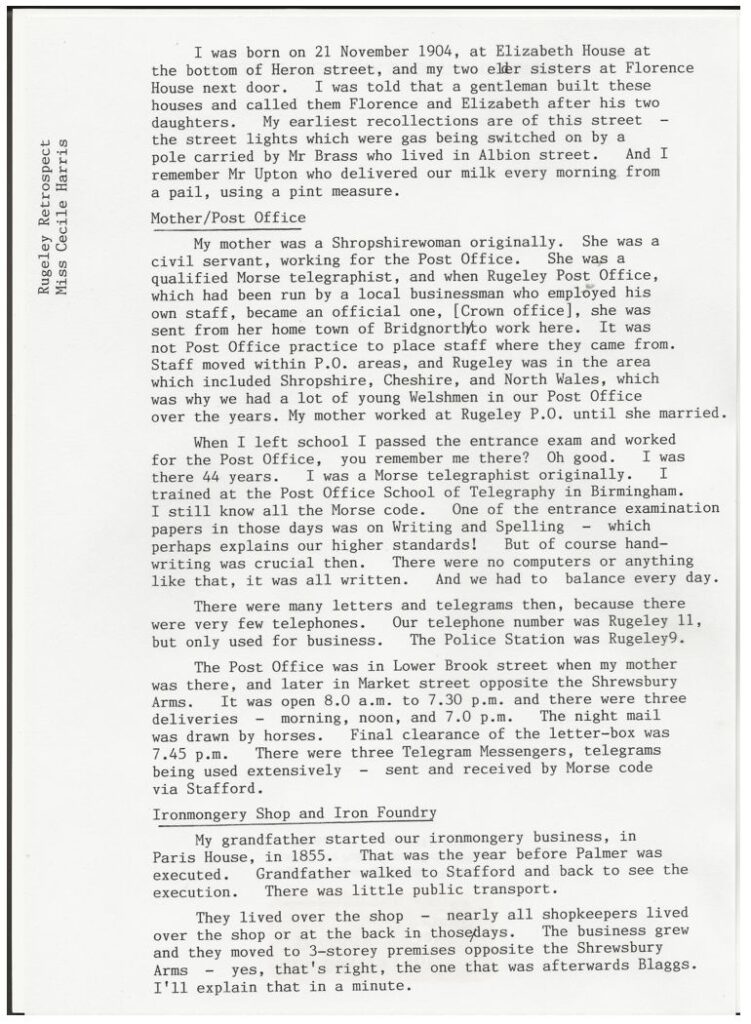
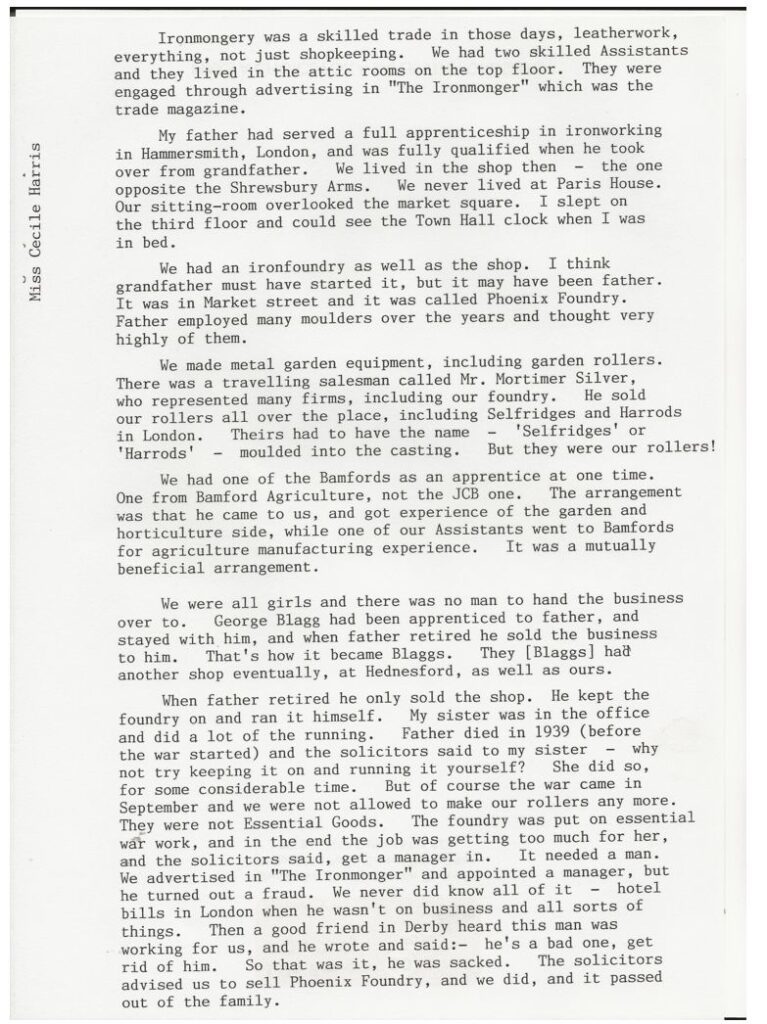
First page of a typed oral history interview with Miss Cecile Harris, born in Rugeley in 1904, recalling her childhood, her mother's work at Rugeley Post Office, and the history of her grandfather's ironmongery business and iron foundry in Rugeley.
Figure 12
Second page of a typed oral history interview with Miss Cecile Harris, describing the family's ironmongery shop and Phoenix Ironworks in Rugeley, the manufacture of garden rollers and agricultural equipment, apprenticeships, and the eventual sale of the foundry following the Second World War.
Figure 13

Below are a further selection of images relating to RJ Harris of Rugeley.
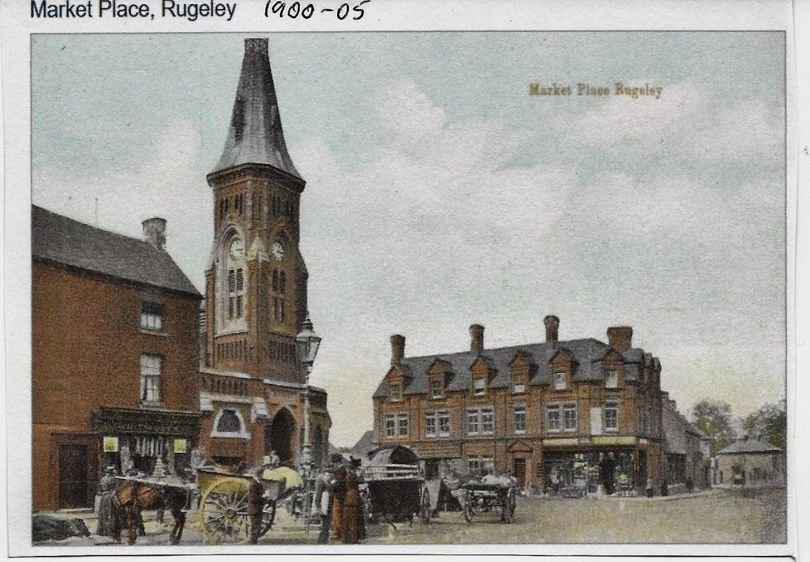
Colour postcard of Market Place, Rugeley, Staffordshire, around 1900–1905, showing the tall Gothic-style clock tower, surrounding brick shops and buildings, horse-drawn carts and people gathered in the market square.
Figure 14
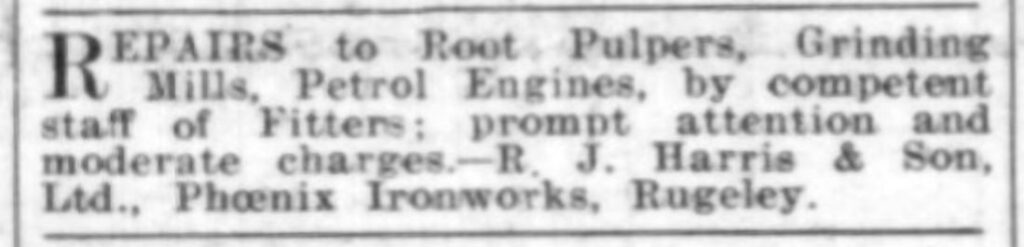
Newspaper advertisement for R. J. Harris & Son Ltd., Phoenix Ironworks, Rugeley, offering repairs to root pulpers, grinding mills and petrol engines by skilled fitters.
Figure 15 Staffordshire Advertiser 6th October 1934
Newspaper advertisement for Harris & Son Ltd., Phoenix Ironworks, Rugeley, offering repairs to iron fencing, machinery, oil engines, steam boilers and pumps.
Figure 16 Staffordshire Advertiser 14th December 1935

Similar Posts

  • What’s in a name?

    An unusual recruitment advert led to a surprising discovery about how Edward Johns & Co. helped shape the language of the bathroom. Company bulletins from the 1930s reveal why “lavatory” disappeared from its catalogues, why “washbasin” took its place, and how the firm debated the best name for the humble W.C.

  • Robert Hedderwick Penman: The Man Who Took Armitage to Glasgow

    Builder of the New Pottery, exporter of sanitary ware and founder of Glasgow’s “Armitage Pottery”, Robert Hedderwick Penman was one of the most ambitious figures in Armitage’s industrial history. His factory vanished, but “Penman’s Works” remained in local memory long after the man himself had crossed the Atlantic.

  • The pre-fabs

    Armitage’s prefabs were intended to last only a few years, yet for many families they became cherished homes for decades. This article traces their origins in Britain’s post-war housing crisis, the heated local debates over their allocation, and the remarkable community that grew around them. It also reveals how the estate became the setting for an innovative stock allotment scheme that helped families cope with rationing and food shortages.

  • Marriage Bonds

    Family history often begins with a few names and dates, but sometimes it uncovers unexpected treasures. While tracing her Conway ancestors from Armitage, Sheila Cochrane discovered an eighteenth-century marriage bond carrying a remarkable £500 penalty. What at first seemed a mystery became the starting point for a fascinating journey through old records, family connections and the lives of her Staffordshire ancestors.

  • John Webb, Landscape Designer to the Gentry

    A weathered sandstone monument in Armitage churchyard marks the resting place of John Webb, one of the Midlands’ leading landscape designers of the late eighteenth and early nineteenth centuries. Researched by local historian Roy Fallows, this article traces Webb’s career from Derbyshire to the great country estates of England, revealing his work at places such as Shugborough, Weston Park and Teddesley before his final years at Lea Hall.

Leave a Reply

Your email address will not be published. Required fields are marked *