
The Old Ford

The site you’re looking at used to be a ford, forming part of Old Road.  The stream is called Shropshire Brook, or sometimes ‘Dummy’s’ Brook after a local resident.

For centuries this ford carried traffic over the brook to link Armitage and Handsacre.  Prior to the construction of New Road, which was originally a Turnpike road where users had to pay a toll, all through traffic crossed the brook here.  Horses, carts, pedestrians and livestock passed through the shallow water before continuing on the old route towards to Lichfield and Uttoxeter.

Downstream at the ford you can see a small brick footbridge.  It existed by the time of the Tithe survey in the early 1840’s and may be older.  It allowed pedestrians to cross the ford without entering the water.

This section of the brook was not only a ford but also a place of resort for residents of both villages.  It was a pleasant area to go for a stroll on a Sunday afternoon or a summer’s evening and a great place for the local children to play.
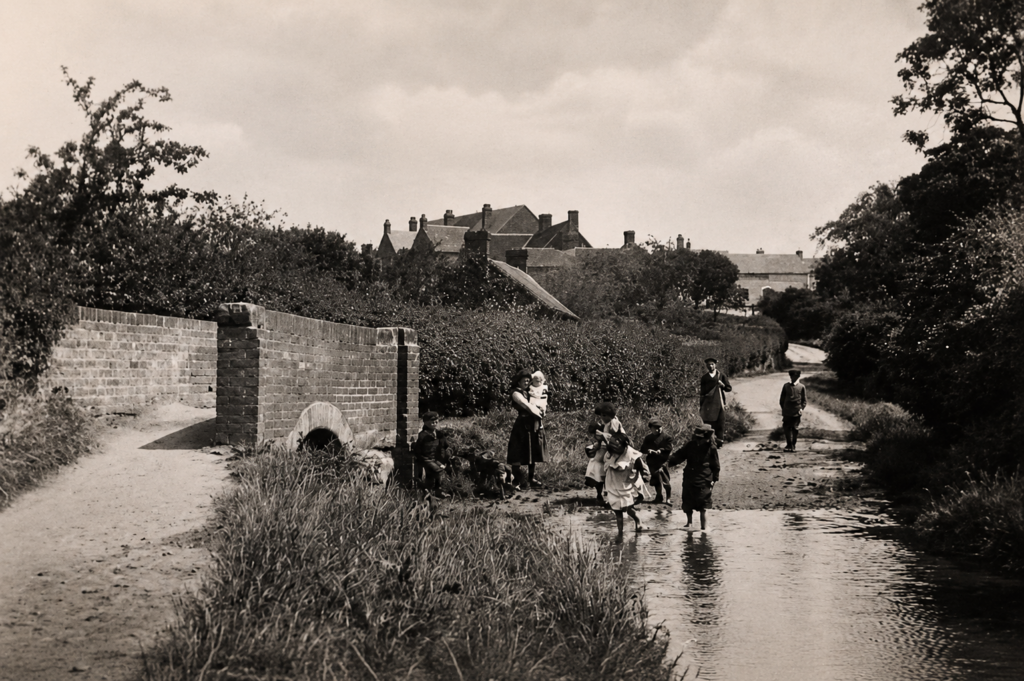
The Old Ford, about 1910:
Historic photograph of the Old Ford between Armitage and Handsacre around 1910, showing children paddling in the shallow brook beside a small brick footbridge, with women, a country lane, hedgerows and village buildings in the background.
Photo taken about 1910

In the 1990’s, Old Road was extended over the brook to join New Road at its present location.  In doing so, the ancient ford was destroyed and the stream fenced off.  Fortunately, the small bridge was left alone to form part of the footpath.  It may well have been constructed using locally made bricks as the area had several brickworks over many years.  There has been a bridge at that point for some considerable time and the present one was likely preceded by a wooden built one.
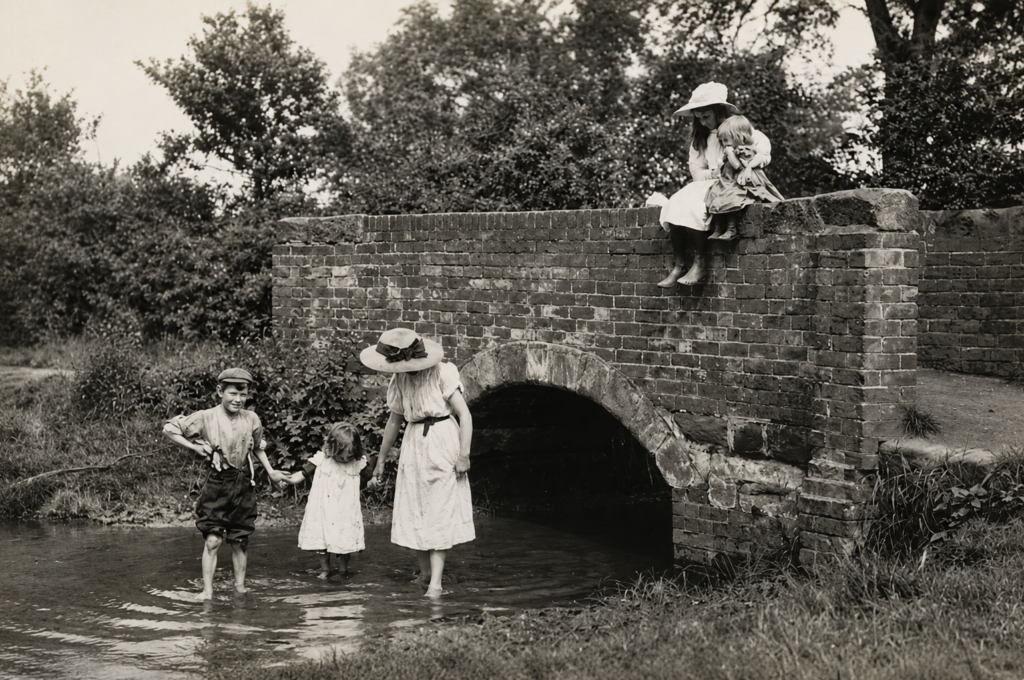
Children at the Old Ford, about 1910:
Historic photograph of the Old Ford between Armitage and Handsacre around 1910, showing a woman with two children paddling in the shallow brook beneath a brick footbridge, while another woman and child sit on the bridge parapet above.
Photo taken about 1910
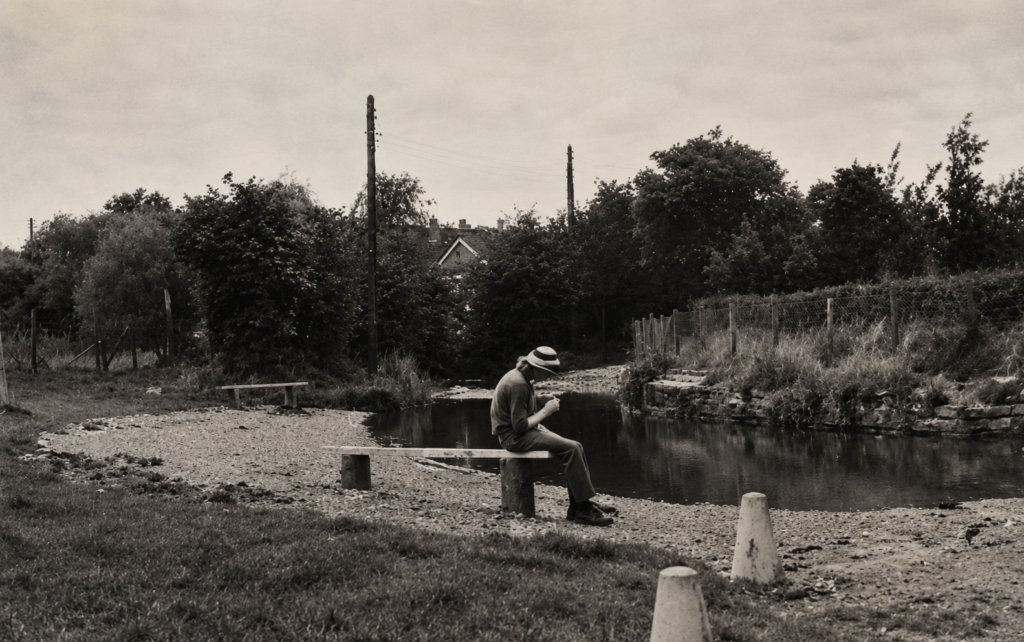
The Old Ford, mid-1970s:
Photograph of the Old Ford between Armitage and Handsacre in the mid-1970s, showing a man sitting beside the brook, with a shallow gravel bank, concrete bollards, hedgerows, trees and telegraph poles in the background.
Photo taken mid 1970s

Since the construction of the road this site had become overgrown and something of an eyesore.  Some local residents decided to tidy the site up and make it a village asset once again.

In 2025 and 2026 with the help of volunteers, the Parish Council and sponsors, the area was restored to be a pleasant place to visit once more.

Similar Posts

  • And the next prize is …

    When an Armitage farm labourer won a cash prize in 1803 for raising eleven children without receiving parish relief, it revealed far more than a simple agricultural award. Using contemporary newspaper reports and parish records, this article explores the life of William Hyden and examines what his remarkable achievement tells us about work, family life and attitudes towards poverty in rural Staffordshire two centuries ago.

  • Handsacre poachers

    In 1849 a gang of young men from Armitage and Handsacre set out to poach pheasants on a neighbouring estate, only to become involved in a violent confrontation with police and gamekeepers. Drawing on contemporary newspaper reports and court records, this article reconstructs the events of that November night and follows the fate of the men involved, revealing the harsh realities of poverty, the Game Laws and Victorian justice.

  • Gifford Foote BEM

    Gifford, a retired teacher, has devoted his life to community service, founding Meeting Point in 1999 to combat isolation. Now in his mid-80s, he remains actively involved, supporting vulnerable residents and fostering connections. His dedication was honoured with a British Empire Medal in the 2025 New Year’s Honours List.

  • Armitage Congregational Chapel: From Worship to Cannabis Factory to Home

    Built in 1820 as a private Congregational chapel, this Grade II listed building has witnessed two centuries of changing fortunes. Drawing on architectural evidence, historical records and recent conservation work, this article traces its evolution from place of worship to neglected shell, its brief and extraordinary use as an industrial-scale cannabis factory, and its eventual rescue through sympathetic conversion into a family home.

  • Armitage Ware colour samples

    When Armitage introduced the world’s first coloured sanitary ware in 1927, it transformed bathroom design. Using rare surviving colour samples, this article traces the evolution of the company’s distinctive colour range, explains how salesmen used these samples to market Armitage products, and explores the changing fashions that shaped British bathrooms from the 1930s onwards.

Leave a Reply

Your email address will not be published. Required fields are marked *