
Thomas Bond Part 3 – brickmaker
By December 1819 Thomas was free from bankruptcy and could restart a business. The pottery was now being run by Bridgwood & Co and as the pottery buildings included the malting operation, he couldn’t operate that, so he moved to Handsacre where he could run both a malting business and a brickyard. Within just a couple of years Thomas was advertising for brick makers.
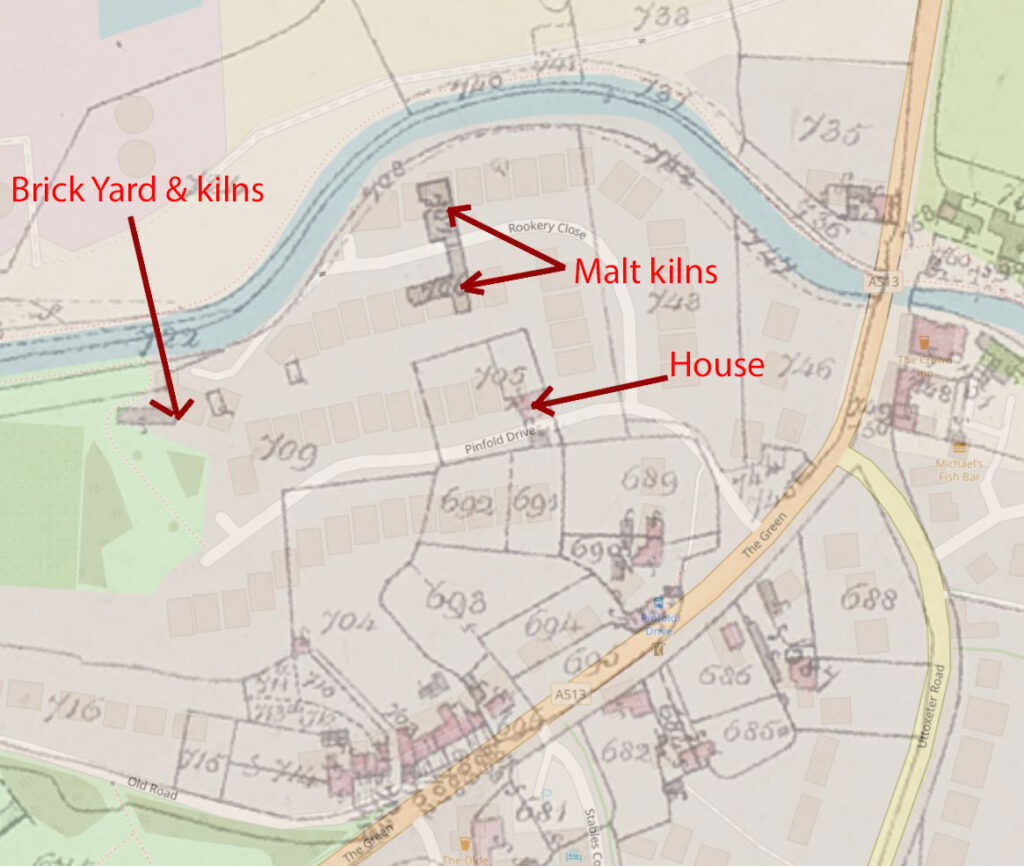
Thomas’ fifth child, Edwin, was born in 1821 or thereabouts – unlike with his four other children, Edwin (and subsequent children) was not baptised at the church – his year of birth is calculated from later census details. Two further children followed – Stephen in 1826 and Sarah in 1830. All five of his sons followed Thomas in the brickmaking trade.
In 1830 Thomas decided to move again and he took out a seven-year lease on land on the opposite side of the canal including Brook Flatts which also had a brickyard – but no malthouse.
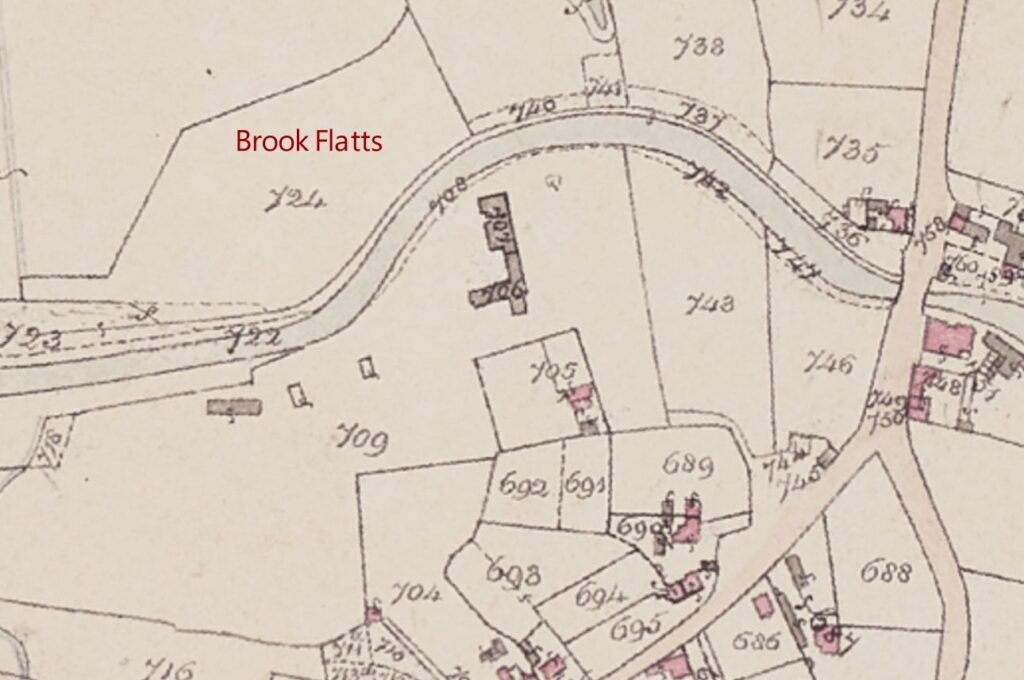
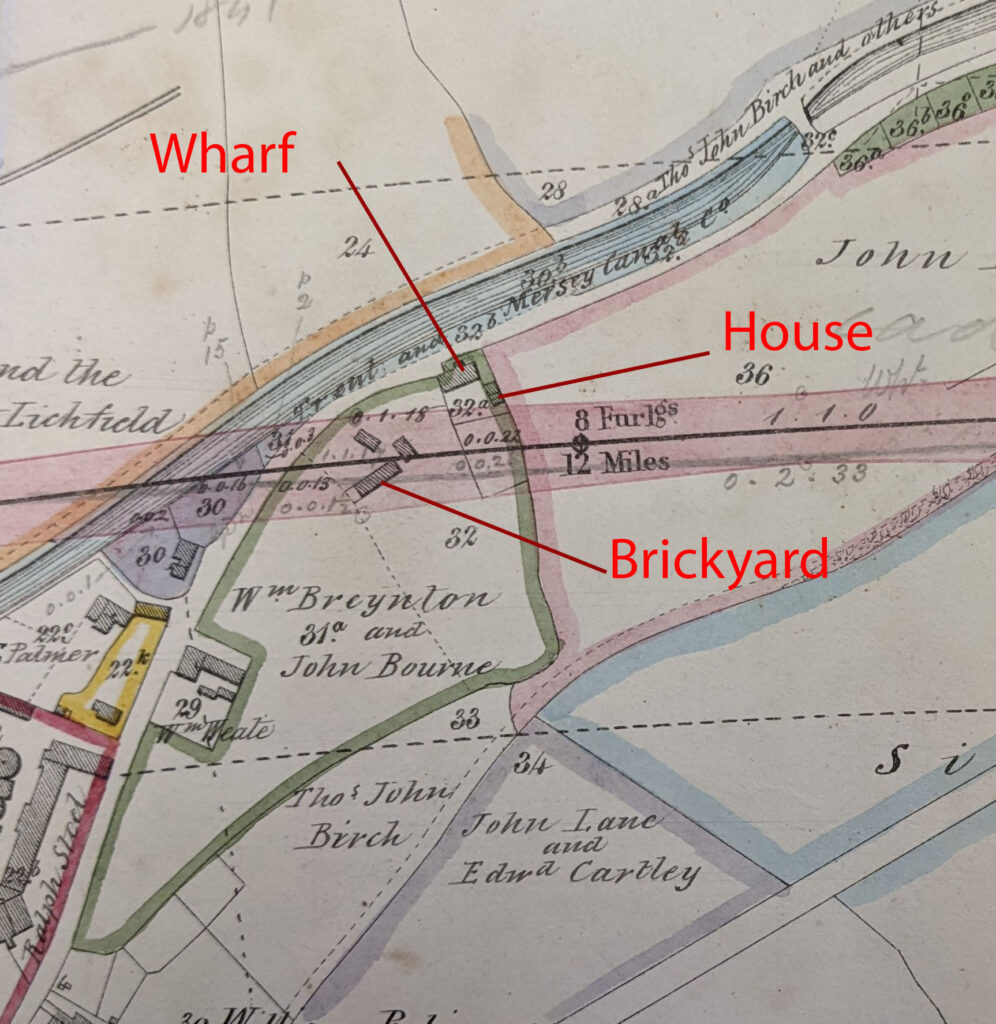
It wasn’t long before the family moved yet again, maybe because there wasn’t a house at the brickyard so they had to rent elsewhere. This time they went back to the brickyard that Thomas had operated when he came to Armitage. This map was created in about 1838 and shows the intended and eventual line of the railway in pink.
His eldest son John moved to Aston, Birmingham, where he married Elizabeth Johnson in July 1834. His second son, Thomas, also married in 1834 to Eliza Jackson at St. John the Baptist, Armitage. A Thomas Bond rented another brickyard from Edward Carthy (marked as 580 in the map below) and this was probably Thomas Jnr. The Pigot Directory of 1835 shows Thomas Bond of Armitage as a manufacturer of bricks and tiles and also Bond & Sergeant making bricks and tiles in Armitage. A Robert Sargant, brickmaker, had a child baptised in Armitage in 1820 and the Sergant family had been making bricks in the Ridware villages for a number of years.
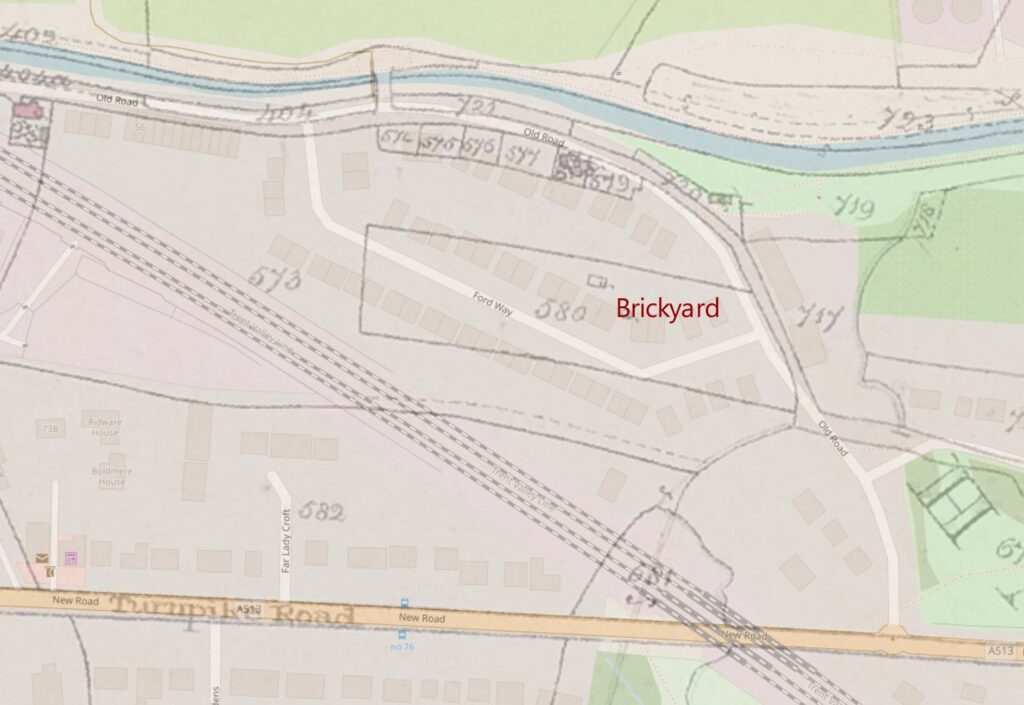
Before long Thomas’ third son, Jonah, set out on his own as a maltster and brickmaker and rented out the premises that the family had operated in the 1820s. For a time therefore the Bond family operated three separate brickyards in the Parish.
By 1841 Thomas had followed his eldest son to the Birmingham area and was living at Wellington Road, Handsworth with his three younger children, Edwin (20), Stephen (15), and Sarah (11). John was at Watery Lane, Aston whilst Thomas Jnr and Jonah were still in Armitage and Handsacre respectively. Jonah gave up the rent of his brickyard on Michaelmas Day 1841 (29th September) leaving only Thomas Jnr in the village. At the age of 30, in 1842, Thomas Jnr died and was buried at St. John the Baptist. His widow, Eliza, remained in the Old Road, Armitage working as a grocer.
Thomas Bond obviously found it hard to settle in any one location because he and his wife next moved to Birkenhead where the 1851 census shows him still working as a brickmaker at the age of 60 with his wife, Elizabeth. Lodging with them were two Irish brickmakers so Thomas still had someone to graft. There is no record of either Thomas or Elizabeth in the 1861 census.
Thomas’ sons had varied success as brickmakers. Jonah was made bankrupt at least three times and Edwin twice. Little can be found about Stephen, but John was definitely a good businessman. By the 1850s brickmaking was gradually becoming mechanised and the introduction of extruders satisfied the Victorian demand for very regular bricks with sharp edges and also meant that brickmakers could stamp their names on the bricks. Martyn Fretwell has a website dedicated to bricks and his article on John Bond is both extensive and includes photographs of some of John Bond’s bricks, two of which are shown here.
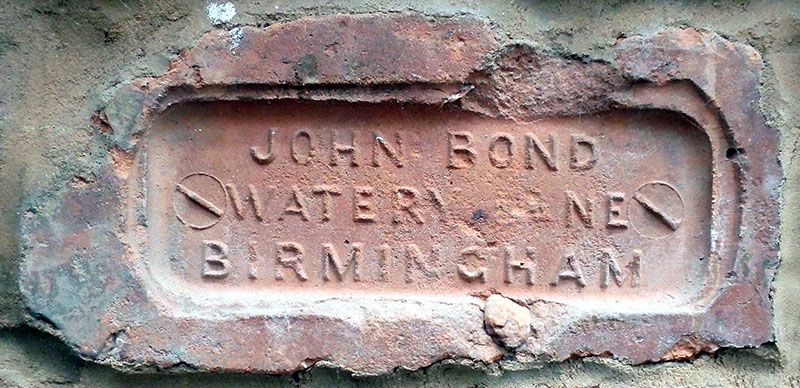
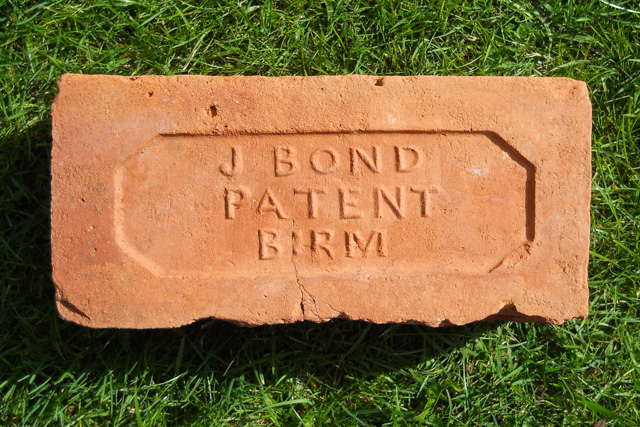
John died in 1880 leaving £20,000 in his will which approximates to £2¼ m in today’s money.