
Armitage Cottage – Gone, But Not Forgotten
By Roy Fallows
Some time ago I was loaned a book by a friend. It was called ‘Finding Susanna’. My friend thought I might be interested because there was a chapter devoted to Susanna’s time living in Armitage.
Until I read the book, I’d never heard of Armitage Cottage. This required some investigation, and after looking at some old maps I saw that it had been situated down a driveway almost opposite the shop in Rugeley Road.
Apparently, it had been demolished in the 1960’s to make way for the warehouses which now occupy that area.
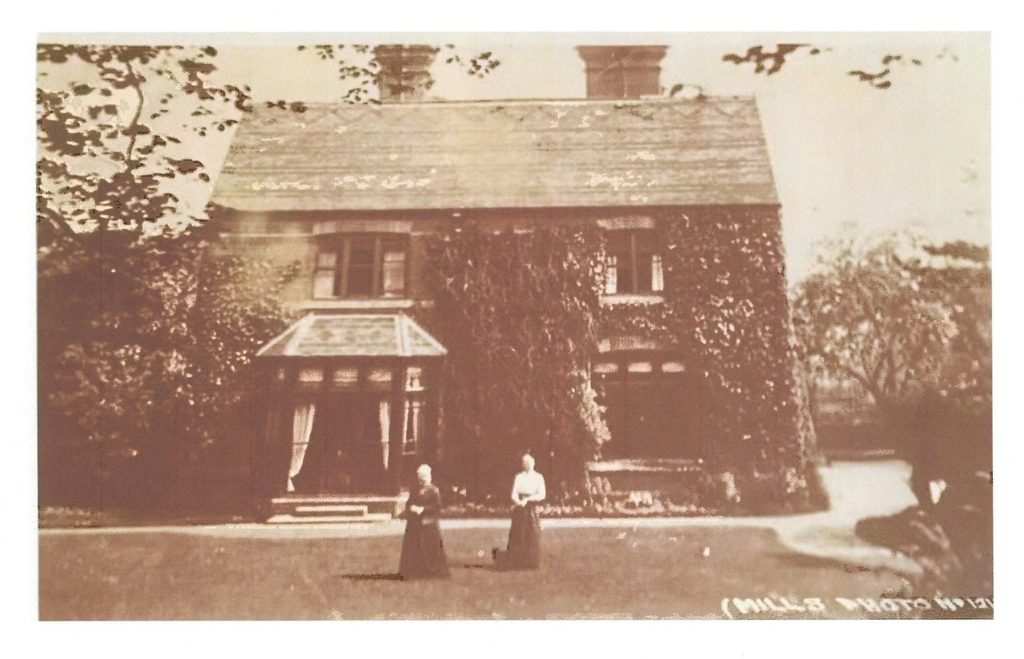
At the time of writing, I can’t say when Armitage Cottage was built, although a newspaper report in the 1960s claimed it was over 300 years old. It was certainly mentioned in the tithe records of 1842 (plots 368 and 369). It was then owned by Thomas John Birch Esq. Mr Birch was a Justice of the Peace and lived a comfortable life with his family and a large number of servants at Armitage Lodge, Rugeley Road. At that time, Louisa Hare with her daughter Ann lived in the house, which included a garden and shrubbery. It was 1.2 acres and was charged a quarter tithe of 1/4d. (about 8p). Louisa Hare was also recorded at that address in the 1841 census.
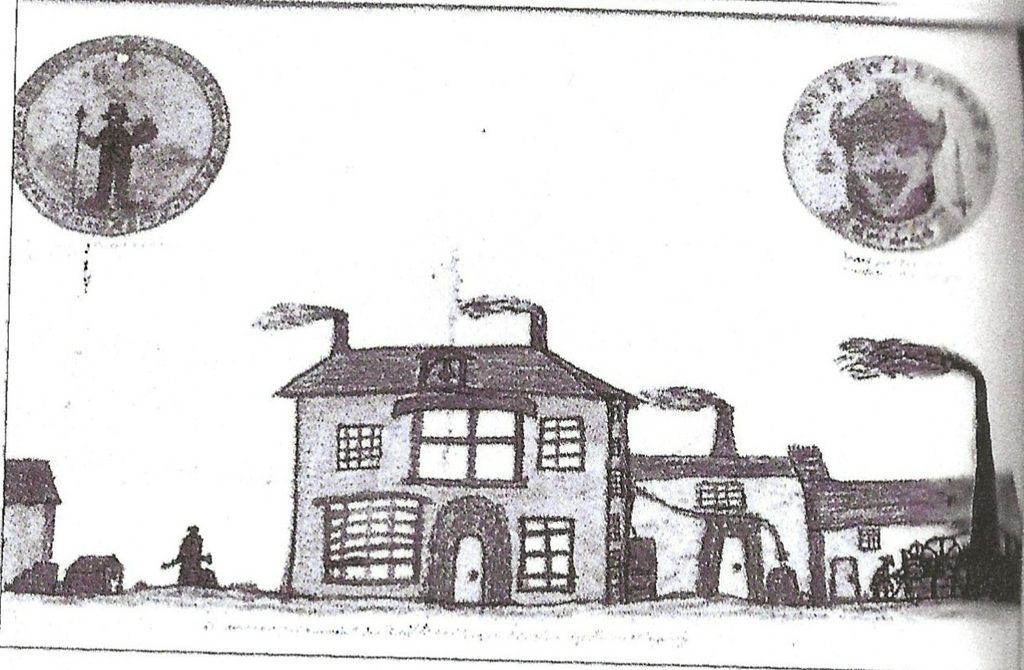
Looking in White’s History, Gazetteer and Directory of Staffordshire for 1851, Mr John Harrop was listed as the occupant. 58 years old John, according to the 1851 Census, was also living with his wife Sarah, daughter Maria and youngest daughter Georgina Perkell, together with three servants. John Harrop gave his occupation as a proprietor of monies on mortgage (part owner of mortgage which would give him some income). His daughter Maria was a holder of railway shares, and that would also provide some income. This was at the height of the ‘railway mania’ where investing in railway shares was considered a guaranteed way of making money. His daughter Georgina lived at the Cottage with her baby son while her husband was away serving with the 33rd Regiment. At this time, the 33rd Regiment of Foot (Duke of Wellington’s) was deployed in Canada. (plot 368, a field adjacent) was occupied by Edward Carthy.
By 1861 Armitage Cottage was occupied by a Mrs Young (Harrison,Hardy and Co., Directory).
Anyone living there would have had the large village pottery works close by.
Susanna Sneyd was born in 1831. She was the daughter of wealthy parents who were well known gentry and landowners in north Staffordshire. She married a clergyman called Charles Ingleby, but the marriage was a disaster. Her new husband was cold and indifferent towards her and before long she left him. The whole business caused a scandal and the gossips of the area had a field day. When her sister in law died from childbirth complications, she went to live with her brother John William Sneyd to look after him and his baby, Ralphy. John William fell out with his father and was disinherited. Consequently, John William, Susanna and the baby left the area and eventually came to live in Armitage in 1862.
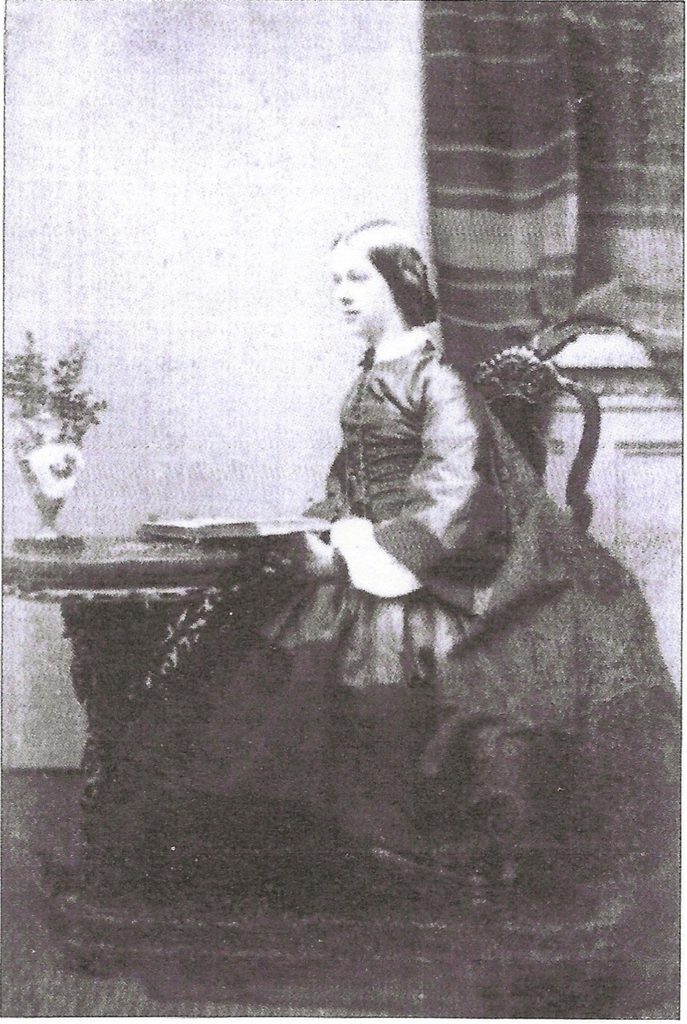
They rented Armitage Cottage for £30 per year from 1862. They were happy, although somewhat hard up, in Armitage. They had left the scandals behind and enjoyed their new found friends in the village. Of course, being very class conscious, they tried to keep their station as upper class. They socialised with the likes of the local vicar and wealthy business and professional people like Josiah Spode IV. Spode, part of the famous Spode chinawear dynasty in the Staffordshire Potteries was a keen photographer and photographed his Sneyd neighbours. Susanna took a full part in the life of the village and John William became a Justice of the Peace and an officer in the Staffordshire Yeomanry. He was listed in the Post Office Directory of 1868 as living at Armitage Cottage.
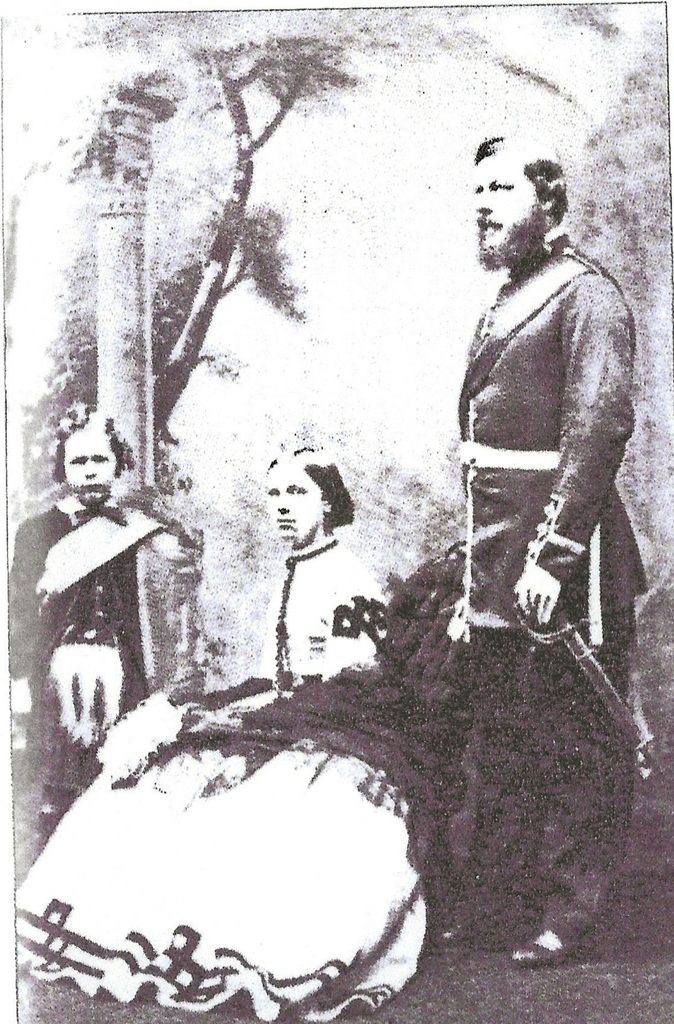
Unfortunately, the house was rather damp, and in 1870 they moved to Abbots Bromley.
In Richard Ewing’s research on The Towers in Armitage he mentions that a family called Adamson may have stayed in Armitage Cottage in 1871 whilst The Towers was being renovated. Yet another family making temporary use of the house.
In the Post Office Directory of 1872 Armitage Cottage indicated that a Henry William Pallet lived there. Henry Pallet appears in the 1871 Census living in Hoode Lane with his wife Charlotte, two daughters and a niece. He describes himself as a retired farmer, which is surprising, given his age of 44yrs.
By 1881 Armitage Cottage was still occupied by Henry Pallet, but by then his wife had died.
On 15th January 1887 a notice appeared in the Staffordshire Advertiser offering Armitage Cottage for rent at a fee of £35 per annum. The house was described as having two sitting rooms, six bedrooms and the usual offices. The occupier at that time was G A May Esq.
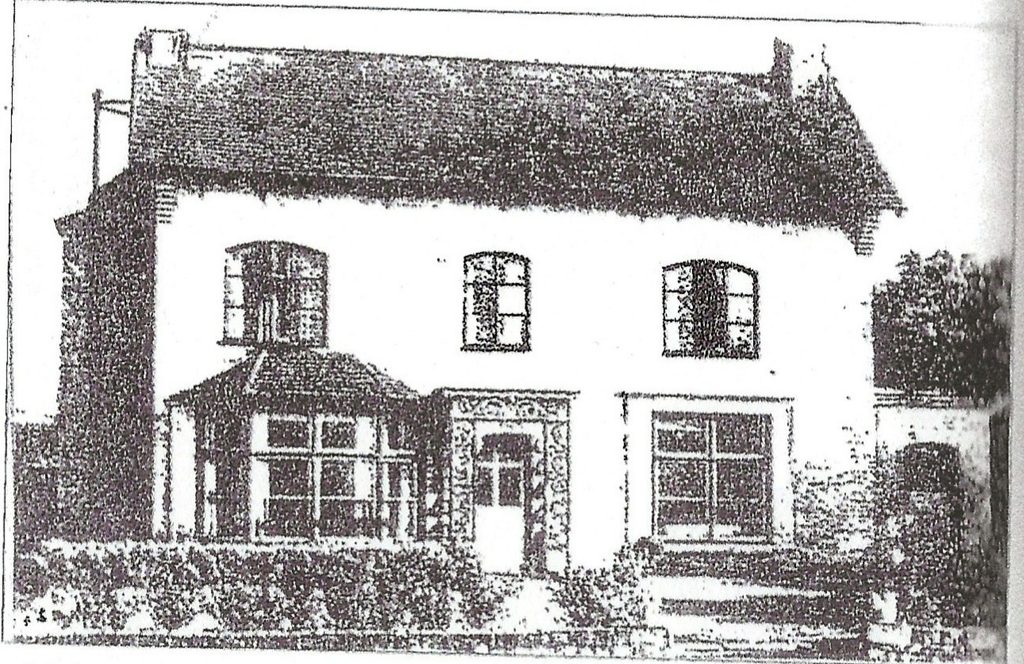
Kelly’s Directory of Staffordshire in 1892 gave yet another occupant of Armitage Cottage. This was George Chapman. In the Census of the previous year he was recorded as a duly registered surgeon and apothecary, practicing as a general practitioner. His wife was Mary. They had a son Harry, a medical student and daughter Alice. They had a servant named Martha Hancock from Tixall.
In 1901 77yrs old George Chapman, was still the occupier with his wife Mary and daughter Alice. The family hailed from the Black Country and were helped by locally born servant Alice Gilbert.
The 1911 Census shows that Armitage Cottage was now occupied by 30 yrs old Joseph Harry Clarke, a medical practitioner who was born in Kingston on Thames. His wife, Constance was born in Birkenhead. At that time they were entertaining a visitor from Brooklyn, USA, Eliza Wylie. I wonder what she thought of our village and its surroundings? When Dr Clarke moved to Armitage House, Mr and Mrs Walker from Station House in Handsacre moved in. This was 1915.
The electoral rolls for 1919 and 1925 show a family by the name of Walker in residence. He was recorded as being a juror, indicating a man of some status.
Sometime later, Mr and Mrs Pointon moved in. There’s a pattern of regular changes of occupier. Perhaps the problem of damp was not going away?
The 1935 electoral roles show a family called Pendlebury living at the cottage. They had moved in in about 1926. By 1939 the Pendlebury’s had moved to Rugeley but, in the meantime, they had opened the garage close to the main Rugeley Road.
When the Pendlebury family moved out, the new occupants and owners were Mr Arthur Simpson and his wife, Ethel. Mr Simpson was a baker and kept a shop in Gate Square. The 1939 Register (a type of Census needed as part of the war against Germany) the Simpson family were still in Armitage Cottage and running the bakery and grocers shop in Gate Square.
Sometime after the end of the war Armitage Cottage was also given the address of 24 Rugeley Road, Armitage.
Arthur Simpson died in 1964 and, in a local newspaper article at about that time, Armitage Cottage was described as being one of the few gracious residences left in the village. The house, which the article claimed was over 300 years old, and its peaceful surroundings were credited by the long living Dr Chapman to be the reason for his longevity.
On 23rd November 1965, Ethel Mary Simpson, by now a widow, sold Armitage Cottage and all the attached land to Armitage Ware Ltd for the princely sum of £4,400.
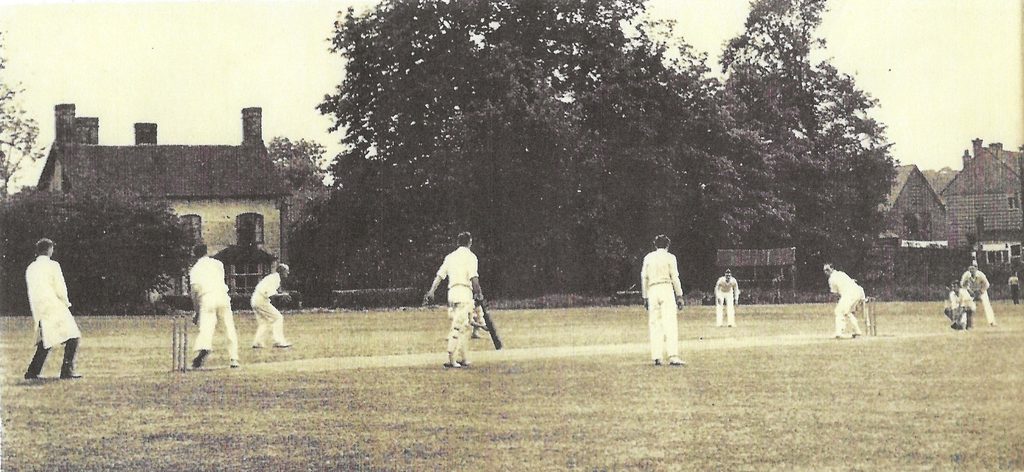
Not long afterwards the property was demolished and, together with the nearby cricket field, was replaced by large warehouses.
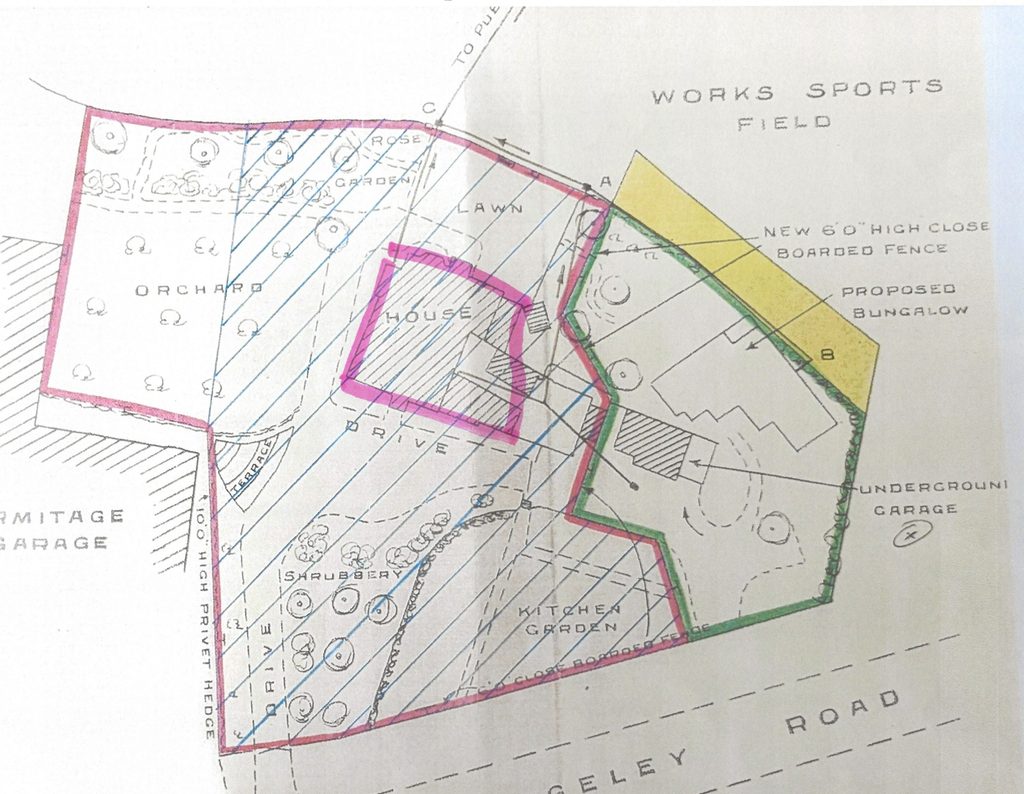
The final occupants of Armitage Cottage have been remembered in the name of the small development off Rugeley Road close to where the old garage and the house stood – Simpson Close.
So, this one property in Armitage had quite a history in its time and more information is likely to be unearthed in the future when other documents are discovered.
I’d like to acknowledge the following for being the sources of some of the material used in the above;
- Pam Inder and Marion Aldis
- John Sanders
- Margaret Boraston
- Alyson Donegan
- The May Grimley Collection
- Staffordshire Local History Services